
The best single grocery store flour for sourdough bread beginners is unbleached bread flour. It offers the dependable strength that helps a new baker handle sticky dough, build structure during fermentation, and shape a loaf with more confidence. Choose a plain, unbleached bread flour rather than a specialty blend, self-rising flour, or a bag marketed primarily for cakes and pastries.
All-purpose flour can make sourdough, and whole-grain flours have a place in feeding a starter and adding flavor. But if buying one bag for both routine starter maintenance and first loaves, bread flour is the clearest, most forgiving choice.
In this article
Why Bread Flour Takes First Place

Image credit: youtube.com
Bread flour earns the top spot because its higher protein content generally supports a stronger gluten network than standard all-purpose flour. That added resilience is helpful during stretch-and-folds, shaping, and the final proof, especially while a beginner is still learning how fermented dough should feel.
All-purpose flour remains a workable second choice if it is already in your kitchen or is the only unbleached option locally. Expect a dough that may feel less robust, then follow a recipe written for all-purpose flour or hold back a little water until you understand its consistency.
Skip specialty-mill shopping for now. A regular grocery-store bread flour lets technique—not an expensive or unusual flour—be the focus of each bake.
Source: The BEST flours for sourdough bread and feeding starter | Sourdough beginners | EP2
Start With Reliable Dough Strength
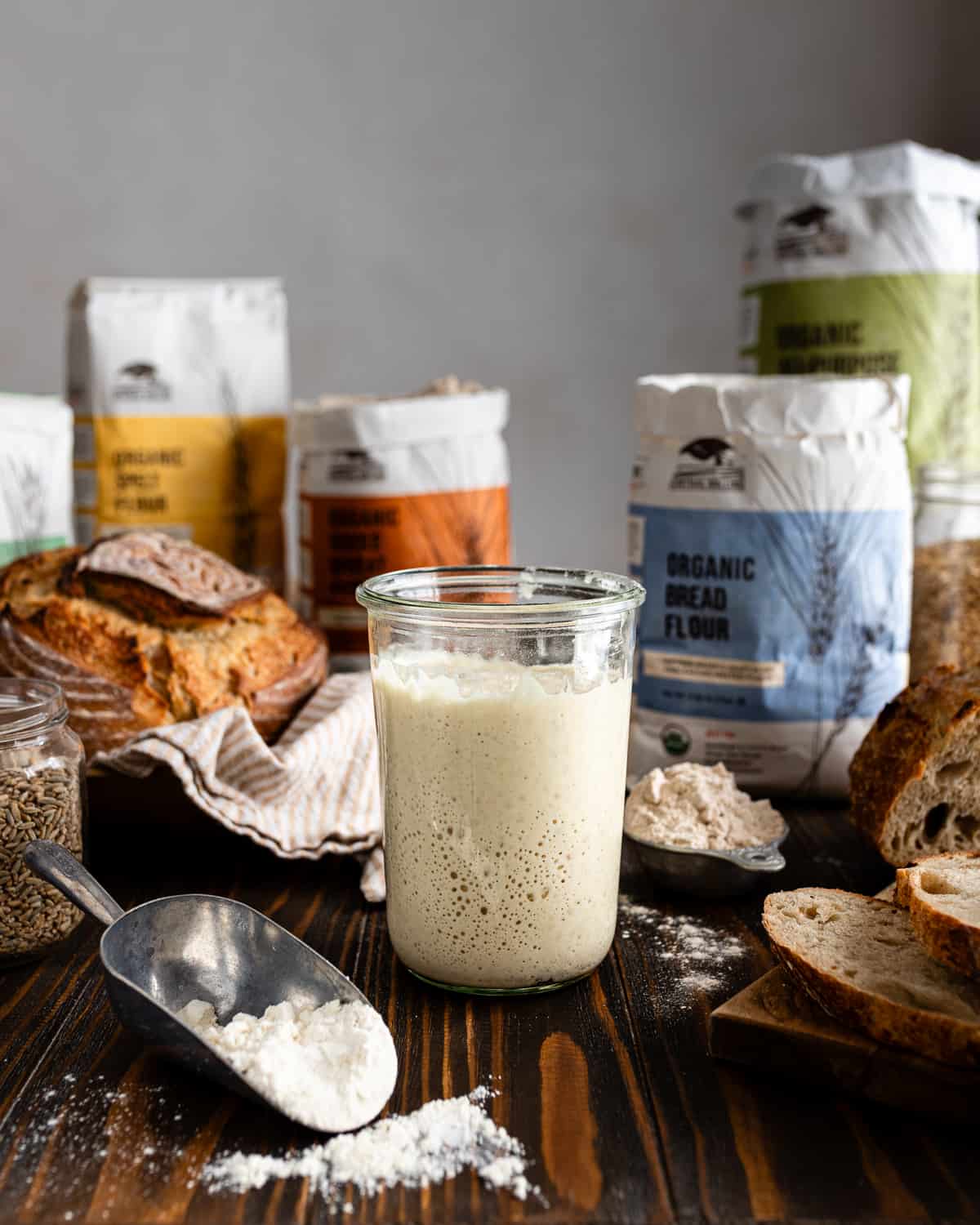
Image credit: makeitdough.com
Flour is not a minor background ingredient in sourdough. Its protein level, milling, and grain type affect how readily a dough forms a network that can hold the gas produced during fermentation. For a first dependable purchase, unbleached bread flour gives that structure without requiring a complicated flour mix.
Check the label for “bread flour” and “unbleached.” Brand matters less than choosing the right category consistently. Using the same flour for several bakes also makes it easier to notice how feeding, water amount, temperature, and timing affect your results.
Avoid self-rising flour for sourdough; it contains added leavening and salt that do not suit a standard starter-and-fermentation process. Save pastry, cake, and other low-protein flours for recipes designed around their softer texture.
Source: Best Flour for Sourdough Starters and Sourdough Bread – Make It Dough
Keep Starter Feeding Simple
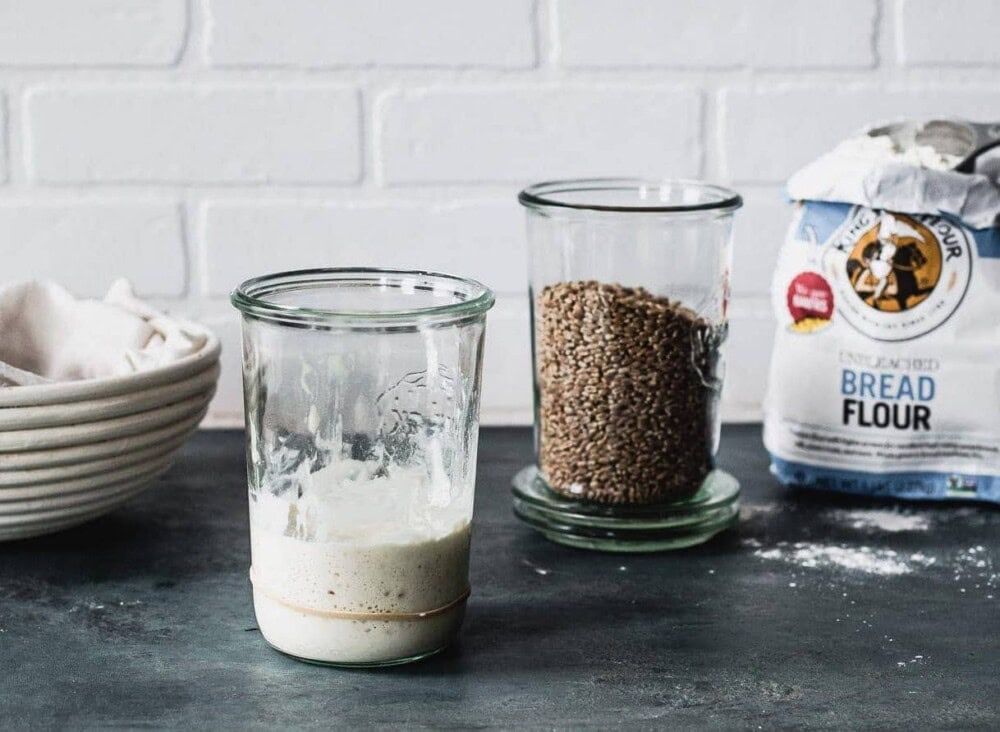
Image credit: heartbeetkitchen.com
A starter does not need an elaborate feeding routine to become usable. Bread flour is a practical choice for feeding it because it keeps your pantry simple and gives you one familiar baseline while you learn its rhythm.
Feed with the same flour by weight, keep the jar loosely covered as appropriate for your setup, and watch for signs of activity: bubbles, a rise after feeding, and a pleasantly fermented aroma. Those signals are more useful than chasing a particular flour label.
Whole wheat or rye can be useful later if you want to experiment with a more vigorous feed, but they are not required for a beginner’s everyday starter. Change one variable at a time so a new flour does not obscure a timing or temperature issue.
Source: Top 5 Sourdough Starter Feeding Tips for Beginners + FAQ’s!
Avoid Common First-Bag Mistakes
Image credit: reddit.com
Do not assume that every flour sold for baking behaves the same way in a sourdough loaf. Whole wheat, rye, and other whole-grain flours absorb water differently and can make dough feel denser or more difficult to judge if they are used as the only flour in a first recipe.
Bleached all-purpose flour may still be usable, but unbleached bread flour is the more straightforward recommendation for building a repeatable process. Also avoid flour blends with added salt, yeast, baking powder, or other ingredients unless the recipe specifically calls for them.
Keep the first purchase uncomplicated: one bag of unbleached bread flour, a scale, and a recipe that specifies its hydration by weight. Consistency is more helpful than a crowded collection of flours.
Source: Sourdough newbie … which flour should I use for my starter ? : r/Sourdough
⚠️ Source unavailable — description based on the image only.
Build Toward a Dependable Loaf
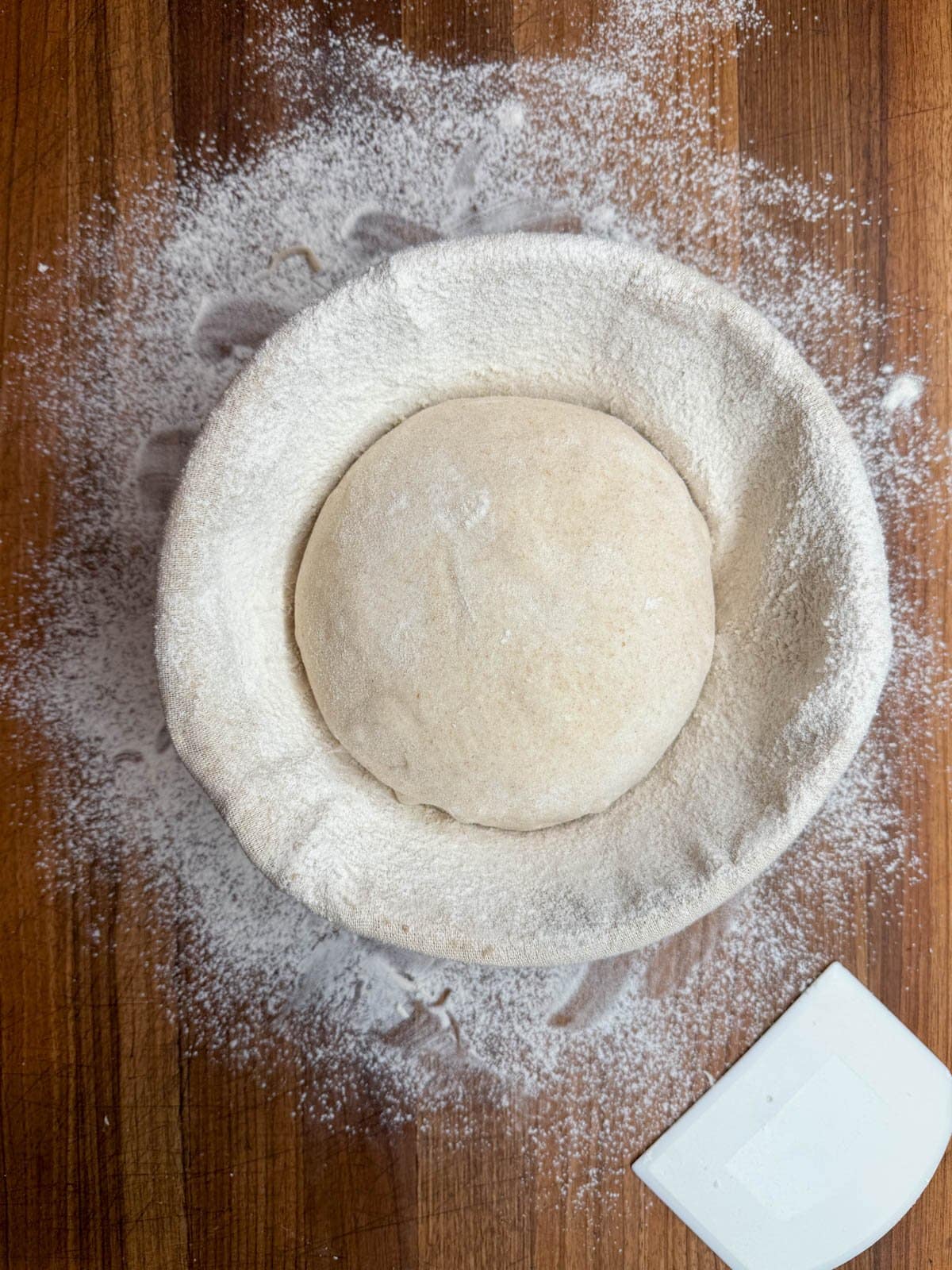
Image credit: homesteadandchill.com
Once your starter is predictably active, use bread flour for a basic loaf before adding whole grains or changing hydration. A simple dough gives you clearer feedback: if it spreads, tears, or rises slowly, you can adjust fermentation, handling, or water without also wondering how a new flour changed the result.
Follow the flour amount and water amount in the recipe by weight. During mixing, reserve a small portion of the water if the dough already feels very loose; it is easier to add water gradually than to correct an overly slack dough.
After a few successful loaves, introduce whole wheat or rye in a modest portion for flavor and variation. The dependable bread-flour base can remain the foundation while you learn what each additional flour contributes.
Source: Easy No-Knead Sourdough Bread Recipe (Beginner Friendly) ~ Homestead and Chill
Buy one bag of unbleached bread flour and use it for both starter feedings and a straightforward first loaf. Record the flour, water, room temperature, and fermentation time for each bake; a few notes will teach you more than switching products after every result.
Once your loaf shape and fermentation feel familiar, try replacing a small share of the bread flour with whole wheat or rye. Start from a stable base, then make changes deliberately.
FAQ
Can I use all-purpose flour for beginner sourdough?
Yes. Unbleached all-purpose flour can make starter and bread, but bread flour is usually more forgiving for a beginner because it generally creates a stronger dough.
Should I use bread flour to feed my sourdough starter?
Yes. Using unbleached bread flour for routine feedings is a simple, practical approach. Keep the feeding method consistent while learning how quickly your starter rises.
Do I need whole wheat or rye flour to make sourdough?
No. They can add flavor and may be useful in some starter routines, but they are optional. A plain unbleached bread flour is enough to begin.
Is bleached flour bad for sourdough?
It can still work, but unbleached bread flour is the simpler choice for a beginner who wants reliable dough strength and fewer variables.
Image sources
-
The BEST flours for sourdough bread and feeding starter | Sourdough beginners | EP2
-
Best Flour for Sourdough Starters and Sourdough Bread – Make It Dough
-
Sourdough newbie … which flour should I use for my starter ? : r/Sourdough
-
Easy No-Knead Sourdough Bread Recipe (Beginner Friendly) ~ Homestead and Chill